Sunscreen is the single most evidence-backed skincare product you can use. The science on UV damage, its role in premature ageing, hyperpigmentation, compromised barrier function, and skin cancer risk, is unambiguous. And yet, choosing a sunscreen that actually fits a conscious beauty philosophy, sits comfortably in a layered routine, and does not leave skin chalky, greasy, or congested remains one of the most common frustrations in skincare.
The clean sunscreen space has improved dramatically over the past several years, but navigating it still requires understanding a few key distinctions. Here is a practical, science-informed guide to finding an SPF that works for your skin and aligns with your values.
Chemical vs Mineral Sunscreen: What Is the Difference?
All sunscreens work by either absorbing UV radiation and converting it to heat (chemical/organic filters) or physically reflecting and scattering UV radiation (mineral/inorganic filters). Understanding this difference is the starting point for evaluating a clean SPF.
Chemical (Organic) UV Filters
Chemical filters include ingredients like oxybenzone, avobenzone, octinoxate, homosalate, octisalate, and octocrylene. They work by absorbing UV energy within the skin and releasing it as heat.
Concerns about chemical filters centre on several areas:
- Systemic absorption: The FDA has determined that several chemical UV filters are absorbed into the bloodstream at levels that exceed what is considered safe by existing guidance. Oxybenzone in particular is detected in blood, urine, and breast milk after application.
- Hormonal disruption potential: Oxybenzone and a number of other chemical filters are classified as endocrine-disrupting compounds in laboratory studies. The real-world significance of this for human health remains debated, but the precautionary evidence is sufficient to justify avoidance in a clean beauty context.
- Environmental impact: Oxybenzone and octinoxate have been shown to damage coral reef ecosystems at low concentrations. Hawaii and a number of other jurisdictions have banned these filters in reef-adjacent waters.
Mineral (Inorganic) UV Filters
Mineral sunscreens use zinc oxide, titanium dioxide, or both as their UV-filtering agents. These minerals sit on top of the skin and scatter or reflect UV radiation before it penetrates.
Mineral filters are generally considered the better choice:
- They are not significantly absorbed into the bloodstream through intact skin
- Neither zinc oxide nor titanium dioxide is classified as an endocrine disruptor
- Both have strong safety records spanning decades of use
- Zinc oxide also has anti-inflammatory properties, making mineral SPFs gentler for sensitive and reactive skin
The main limitation historically associated with mineral sunscreens is cosmetic: zinc oxide and titanium dioxide can leave a white or chalky cast on deeper skin tones. Modern formulation technology has significantly reduced this issue, particularly with non-nano particle sizes and improved dispersion systems.
What "Non-Nano" Means and Why It Matters
Nanoparticles are materials reduced to an extremely small size (below 100 nanometres in diameter). Nano-sized zinc oxide and titanium dioxide particles are transparent on the skin, which solves the cosmetic whitening problem, but raises questions about whether the particles are small enough to penetrate the skin barrier and enter cells.
Non-nano particles are larger than 100 nanometres and are not considered to penetrate intact skin. Current regulatory guidance and scientific consensus holds that non-nano mineral UV filters are safe for topical use. For a clean, precautionary formulation philosophy, non-nano is the standard to look for.
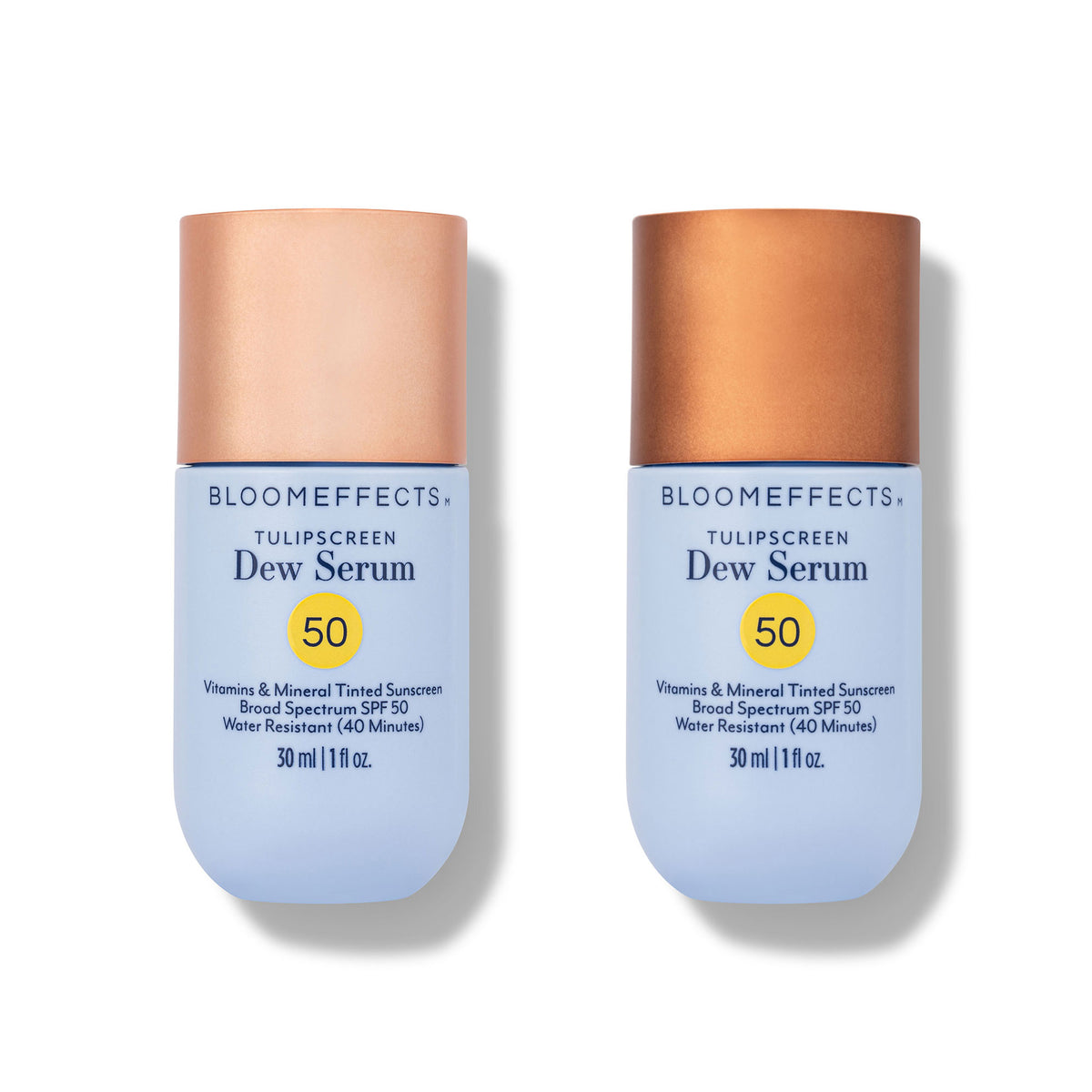
The Tulipscreen™ Dew Serum & Tulipscreen™ Shield & Glow SPF Sunstick use non-nano mineral UV filters, specifically to ensure both skin safety and environmental responsibility.
What Else to Look for in Sunscreen
Fragrance-Free
Fragrance is one of the most common skin sensitisers in cosmetics. If you have sensitive skin then for your daily SPF, you should really give fragrance a miss.
Skin-Supportive Ingredients Alongside the UV Filter
A good clean sunscreen does more than protect. Look for formulas that include barrier-supportive, hydrating, or antioxidant ingredients that add skincare value beyond UV filtering. Niacinamide, Hyaluronic Acid, Squalane, Vitamin C, and botanical antioxidants in a sunscreen formula mean the product is contributing to skin health even as it protects.
The Tulipscreen™ Dew Serum combines mineral SPF 50 protection with the Proprietary Dutch Tulip Complex™, delivering antioxidant and hydrating benefits alongside UV protection in a formula that sits comfortably in a multi-step routine.
Appropriate SPF Level
Most dermatologists recommend SPF 30 as a minimum for daily use, with SPF 50 preferred for higher UV exposure, outdoor activities, or skin with existing photodamage or hyperpigmentation concerns.
A Comfortable Finish
If a sunscreen is uncomfortable to wear, too greasy, too chalky, too heavy, or prone to pilling under makeup, it will not be used consistently. And inconsistent use eliminates most of the benefits. Texture, finish, and wear experience matter enormously for a daily-use product.
Mineral Sunscreen Myths Debunked
"Mineral sunscreen always leaves a white cast"
Modern mineral formulations have come a long way. Careful particle sizing, advanced dispersion technology, and innovative delivery formats (like the sunstick format) ensures minimized whitecast on most skin tones. Testing on your actual skin tone before committing is always advised.
"Mineral sunscreen is not as effective as chemical SPF"
Both mineral and chemical sunscreens, when applied correctly and at the right amount, provide equivalent protection at the same SPF level. The difference is in how that protection is delivered, not its magnitude.
"You only need sunscreen on sunny days"
UVA radiation, the spectrum primarily responsible for photoageing, penetrates clouds and glass. It is present throughout the year, at all latitudes, regardless of visible sunshine. Daily application, every day, regardless of weather, is the only approach that provides meaningful cumulative protection.
"A higher SPF means I need less"
SPF 50 blocks approximately 98% of UVB rays; SPF 30 blocks approximately 97%. The difference is smaller than most people assume, and neither provides meaningful protection unless the correct amount is applied. The recommended amount for the face is approximately a quarter teaspoon, or the equivalent in a stick format applied generously in overlapping strokes.
How to Incorporate SPF into Your Routine
Sunscreen is always the final step of the morning skincare routine, applied after moisturiser and before makeup if worn. This positioning ensures the UV-filter forms an uninterrupted protective layer on the skin's surface.
For reapplication throughout the day (every two hours of UV exposure, or after sweating or swimming), a stick format is often the most practical option over makeup. The Tulipscreen™ Dew Shield & Glow SPF Sunstick can be applied directly over a finished look without disturbing the layers beneath.
For those who want to streamline their routine, the Tulipscreen™ Dew Serum (SPF 50) combines mineral Broad Spectrum SPF 50 protection with the Proprietary Dutch Tulip Complex™ and hydrating ingredients, effectively functioning as both a serum and a sunscreen in a single step.
The Takeaway
Sunscreen is non-negotiable for anyone who cares about both skin health and ingredient safety. The combination of non-nano mineral UV filters, fragrance-free formulation, skin-supportive actives, and an SPF of 30 or higher defines the standard worth looking for.
Apply it every single morning, every single day. Nothing else in your skincare routine will have as significant an impact on your skin's long-term health and appearance.
Discover Bloomeffects' clean SPF range including the Tulip Dew Shield and Glow SPF Sunstick and Tulipscreen Dew Serum at bloomeffects.com.