Few skincare questions generate more debate than this one: can you use Niacinamide and Vitamin C in the same routine? The short answer is yes, and if you are doing it correctly, you should. The longer answer requires unpacking some persistent skincare mythology, understanding why the concern arose in the first place, and knowing how to choose the right forms of both ingredients for the results you are after.
Why People Think You Cannot Mix Them
The concern about combining Niacinamide (Vitamin B3) and Vitamin C stems from older research suggesting that the two ingredients could react to form niacin, a compound that can cause flushing and skin irritation in some people. This reaction was documented in laboratory conditions using high concentrations and temperatures that bear little resemblance to actual skincare use.
The form of Vitamin C used in those original studies was primarily L-Ascorbic Acid, the most common and most reactive form of Vitamin C in skincare. At low pH (which L-Ascorbic Acid requires to be stable), there is some theoretical basis for the conversion. However, studies have consistently shown that the amount of niacin actually produced in real-world skincare use is negligible, well below the threshold at which flushing would occur.
More importantly, the skincare landscape has moved significantly beyond L-Ascorbic Acid alone. Newer, more stable Vitamin C derivatives have largely resolved the concern entirely.
What Niacinamide Actually Does for Skin
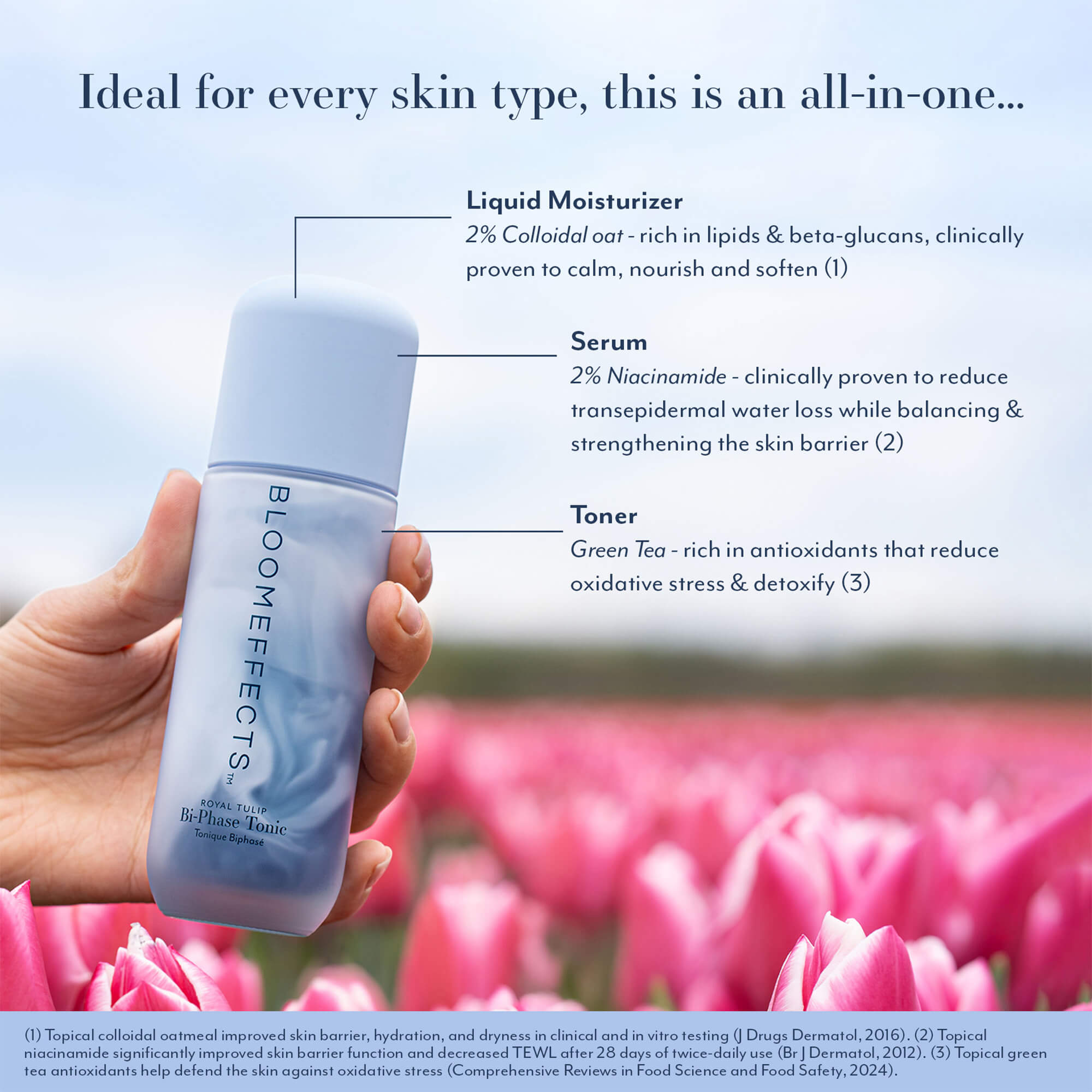
Niacinamide, Vitamin B3, is one of the most well-supported and versatile active ingredients in modern skincare. Its benefits span multiple skin concerns, which is why it has become a near-universal inclusion in high-performance formulas.
Barrier Strengthening
Niacinamide increases the production of ceramides, the key lipids in the skin barrier. Stronger barrier function means better moisture retention, reduced sensitivity, and greater resilience against environmental stressors.
Pore Minimisation
By regulating sebum production and strengthening the skin around pores, Niacinamide makes pores appear smaller and less visible over consistent use.
Evening Skin Tone
Niacinamide inhibits the transfer of melanin to the skin's surface cells, which over time reduces the appearance of hyperpigmentation, post-inflammatory marks, and an uneven complexion.
Fine Line Support
At higher concentrations, niacinamide has been shown to improve the appearance of fine lines and wrinkles, likely through its role in supporting cellular energy production (NAD+) and barrier function.
What Vitamin C Does for Skin
Vitamin C (Ascorbic Acid and its derivatives) is one of the best-studied antioxidants in topical skincare. Its skin benefits are well established:
Collagen Synthesis
Vitamin C is essential for the biosynthesis of collagen. Topical application has been shown to stimulate collagen production, improving skin firmness and reducing the appearance of fine lines over time.
Brightening and Tone Correction
Vitamin C inhibits the enzyme tyrosinase, which is involved in melanin production, making it effective at evening complexions.
Antioxidant Protection
As a powerful antioxidant, Vitamin C neutralises free radicals generated by UV radiation and pollution, the environmental stressors that drive premature ageing. Used alongside sunscreen, it provides a complementary layer of photo-protection.
Skin Radiance
Even at lower concentrations, Vitamin C contributes a visible luminosity to the complexion. Skin looks brighter, clearer, and more awake.
The Critical Role of Vitamin C Form
Not all Vitamin C is created equal. The form of Vitamin C in a product has significant implications for its pH requirements, stability, and tolerability, and directly determines whether it is safe to use alongside niacinamide.
L-Ascorbic Acid
The most potent and most researched form of Vitamin C. Requires a low pH (under 3.5) to remain stable and active. This acidic pH environment is what contributes to the theoretical reaction with Niacinamide, and also what makes L-Ascorbic Acid the most likely to cause sensitivity and irritation in reactive skin types.
THD Ascorbate (Tetrahexyldecyl Ascorbate)
An oil-soluble, highly stable form of Vitamin C. Because it is lipid-soluble, it penetrates the skin barrier more readily than water-soluble forms, reaching the dermis where collagen synthesis occurs. Critically, it does not require a low pH to function, which eliminates the concern about interaction with Niacinamide entirely. It is also far better tolerated by sensitive and reactive skin types.
This is the form of Vitamin C used in our Royal Tulip Vitamin C Facial Oil. The oil-soluble base also makes it complementary to the barrier-supportive fatty acids in the formula.
Kakadu Plum Extract
One of the most concentrated natural sources of Vitamin C available, Kakadu Plum provides Vitamin C in a botanical context alongside co-factors that support its stability and activity. This form is used in the Royal Tulip Dew Drops alongside Niacinamide, in a single, purpose-built formula that demonstrates exactly how well the two ingredients work together when the Vitamin C form is appropriate.
The Brightening Trio: Tulip, Niacinamide, and Vitamin C
When you add tulip extract into the equation, the combination becomes even more powerful. Our Proprietary Dutch Tulip Complex™ delivers antioxidants and natural brightening AHAs that work synergistically with both niacinamide and vitamin C.
Together, this trio addresses the full spectrum of luminosity and tone concerns:
- Niacinamide: Strengthens the barrier, minimises appearance of pores, and inhibits melanin transfer
- Vitamin C: Stimulates collagen production, inhibits tyrosinase, and protects against oxidative dullness
- Proprietary Dutch Tulip Complex™: Delivers antioxidant protection and gentle AHA brightening
The Royal Tulip Dew Drops brings all three into a single, elegantly layered serum formula. Its 2% Niacinamide, 2% Kakadu Plum rich in Vitamin C, plus Vitamins D and E, Squalane, and the Proprietary Dutch Tulip Complex™ create a formula that is greater than the sum of its parts, providing brightening, barrier support, hydration, and protection in one application.
How to Use Niacinamide and Vitamin C Together: Practical Guidance
If you are using separate products for Niacinamide and Vitamin C (rather than a combined formula), here is how to layer them for maximum benefit and minimum risk:
Option 1: Use a Stable Vitamin C Derivative
Choose an oil-soluble vitamin C like THD ascorbate or a natural botanical Vitamin C source. Apply Niacinamide first (serum or toner), allow it to absorb, and then apply the Vitamin C product. There is no pH conflict and no reason to separate them.
Option 2: Use L-Ascorbic Acid in the Morning and Niacinamide in the Evening
If you prefer a low-pH L-Ascorbic Acid Vitamin C serum, apply it in the morning (it works particularly well as a daytime antioxidant alongside SPF) and save your Niacinamide products for the evening routine. This avoids any theoretical pH interaction and also plays to each ingredient's optimal timing, Vitamin C for antioxidant protection during the day, Niacinamide for barrier reinforcement and cellular repair overnight.
Option 3: Use a Combined Formula
The simplest option is to choose a formula that has already solved the compatibility question. Our Royal Tulip Dew Drops combines Niacinamide and Kakadu Plum Vitamin C in a single balanced serum, eliminating the layering question entirely.
The Bottom Line
The concern about using Niacinamide and Vitamin C together is largely a historical artefact of early research using reactive forms of Vitamin C that are no longer the whole story. With stable, skin-compatible Vitamin C derivatives, there is no meaningful interaction, and the two ingredients work beautifully in concert.
Together, they address the full spectrum of what most people mean when they say they want brighter, healthier-looking skin: more even tone, less visible hyperpigmentation, strengthened barrier, and a genuine luminosity that holds up throughout the day.
The key, as always, is formulation. Choose well-made products that have done the compatibility work for you, and trust the results.
Explore the Royal Tulip Dew Drops, Royal Tulip Vitamin C Facial Oil, and the full Bloomeffects brightening collection at bloomeffects.com.