Getting the order of your skincare products right is one of those foundational things that makes everything else work better. Apply products in the wrong sequence and active ingredients cannot reach their targets, formulas can pill and sit uncomfortably on the skin, and you may even diminish the efficacy of products you have invested in carefully.
The good news is that once you understand the underlying logic, thinnest to thickest, water before oil, active before protective, layering skincare becomes intuitive rather than complicated.
Here is a clear, practical guide to the correct order for both morning and evening routines, with the reasoning behind each step.
The Core Principle: Thinnest to Thickest
The most reliable rule for layering skincare is to apply products from the lightest consistency to the heaviest. Thin, watery formulas go first because they need direct contact with the skin to absorb effectively. Thicker, creamier formulas go last because they create an occlusive or semi-occlusive layer that locks in everything beneath them.
If you apply a rich cream before a water-based serum, the serum sits on top of the cream rather than penetrating the skin. You are not getting the benefit of either product.
A second useful principle is to apply actives (ingredients designed to produce a specific skin benefit, e.g. brightening or firming) before protectives (ingredients designed to support the barrier and prevent moisture loss). Active ingredients need skin contact to work.
The Morning Routine: Step by Step
Step 1: Cleanser
For some, an evening cleanse is all your skin needs but for oily, normal skin types a gentle morning cleanse removes the oils, sweat, and any product residue that have accumulated overnight. A low-foam, pH-balanced cleanser is ideal, something that refreshes without stripping.
If your skin is dry or very sensitive, a splash of cool water rather than a full cleanse may be sufficient in the morning.
Step 2: Toner or Essence (on Damp Skin)
Immediately after cleansing, before your skin has fully dried, apply your hydrating toner or essence. Skin absorbs water-based products most efficiently when it is already slightly moist. Press the product in with your palms rather than swiping it across the face with a cotton pad, which wastes product and can cause friction.
A toner at this stage does two things: it delivers an immediate layer of hydrating ingredients, and it prepares the skin to receive subsequent layers more efficiently, often described as creating a plumped canvas.
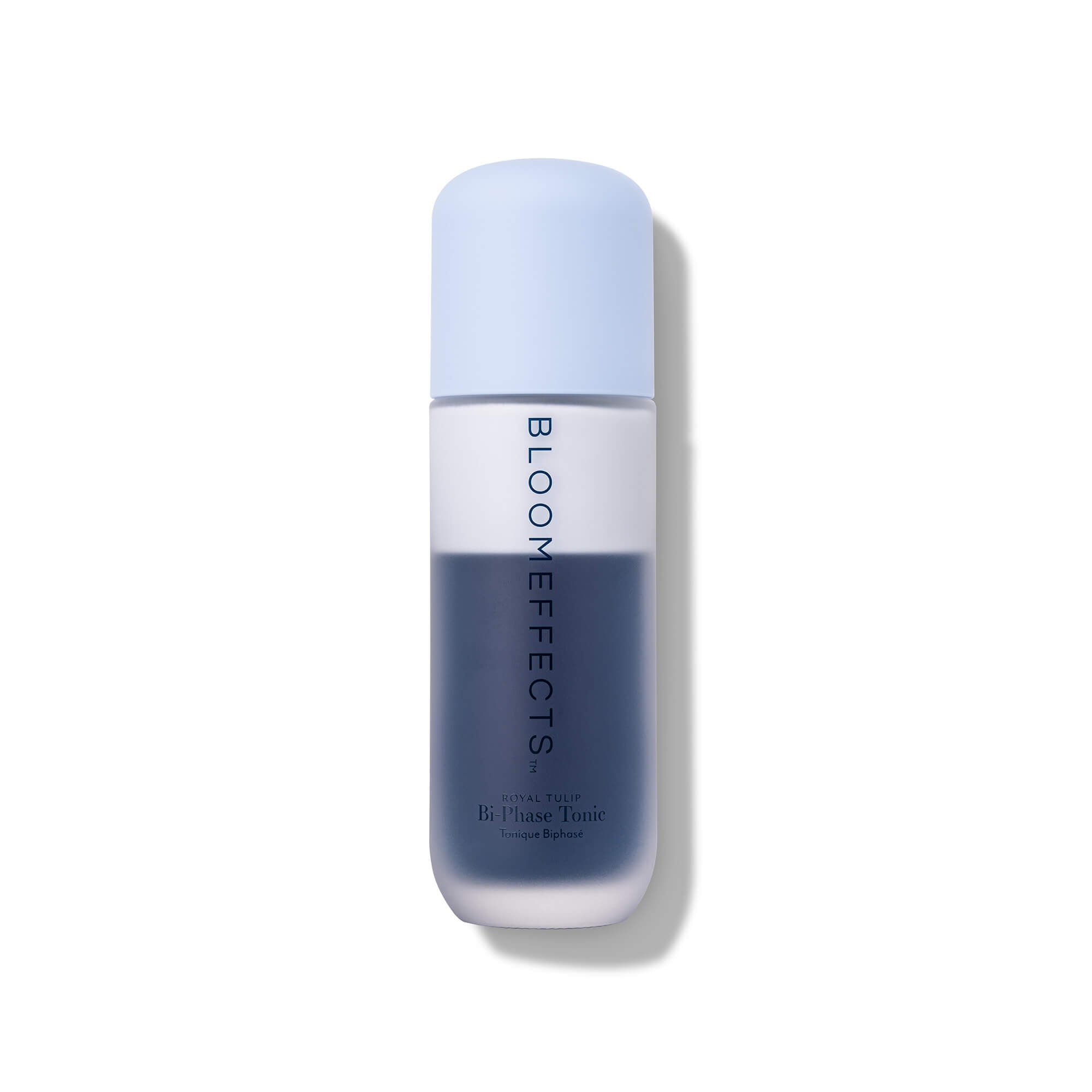
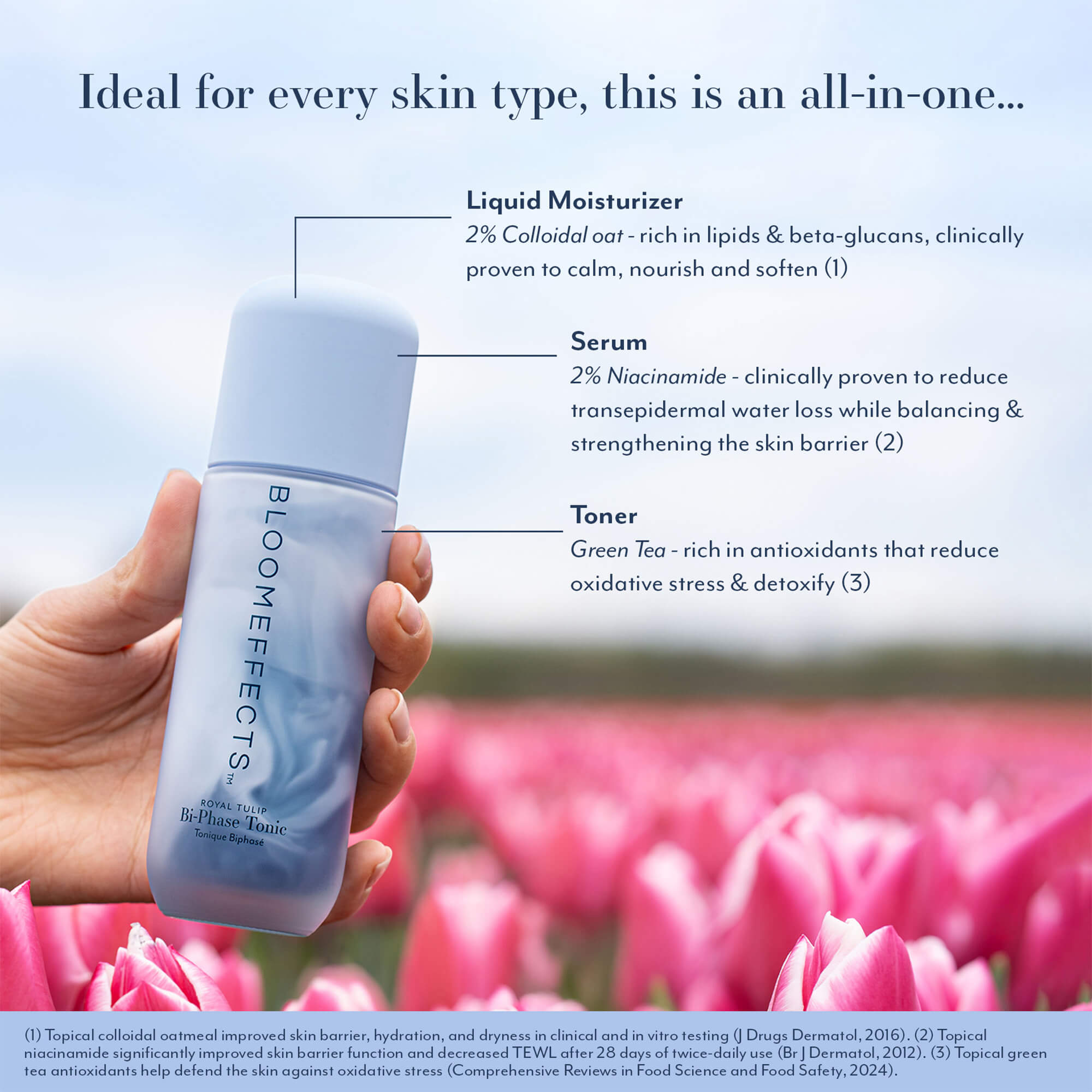
The Royal Tulip Hydrating Bi-Phase Tonic is ideal here. Its lightweight formula with the Proprietary Dutch Tulip Complex™ absorbs rapidly and creates a genuinely hydrated surface for the steps that follow.
Step 3: Serum
Serums are often where the heavy-lifting work happens. They are typically water-based (or occasionally oil-based, in which case they go later), formulated with higher concentrations of targeted active ingredients than you find in cleansers or moisturisers.
In the morning, prioritise serums with antioxidant, brightening, or hydrating benefits. Niacinamide and Vitamin C are excellent morning choices because they work synergistically with sunscreen to protect against environmental damage. A single serum that combines both, like the Royal Tulip Dew Drops, which includes Niacinamide, Kakadu Plum rich in Vitamin C, and the Proprietary Dutch Tulip Complex™, can accomplish the work of multiple products in one step.
Apply 3 to 5 drops, press gently into the skin, and allow 30 to 60 seconds to absorb before the next step.
Step 4: Moisturiser
Your Moisturiser goes on after your serums and before your SPF. It seals in the hydration and active ingredients beneath it, provides a smooth base for sunscreen, and adds its own benefits, emollients, humectants, and any additional active ingredients the formula includes.
In the morning, a lighter moisturiser is often preferable to avoid heaviness under SPF or makeup. The Royal Tulip Elevate Crème provides bounce-building, barrier-supporting moisture with a finish that layers well under sunscreen.
Step 5: SPF (Always Last in the Morning)
Sunscreen is always the final step in your morning routine. This is non-negotiable. UV radiation is the most significant driver of premature ageing, hyperpigmentation, and skin cancer. Applying sunscreen over your moisturiser ensures the UV-filter forms an effective, uninterrupted layer on the surface of the skin.
Never mix sunscreen with your moisturiser, diluting the SPF formula reduces its protective efficacy. Apply it as a dedicated final step.
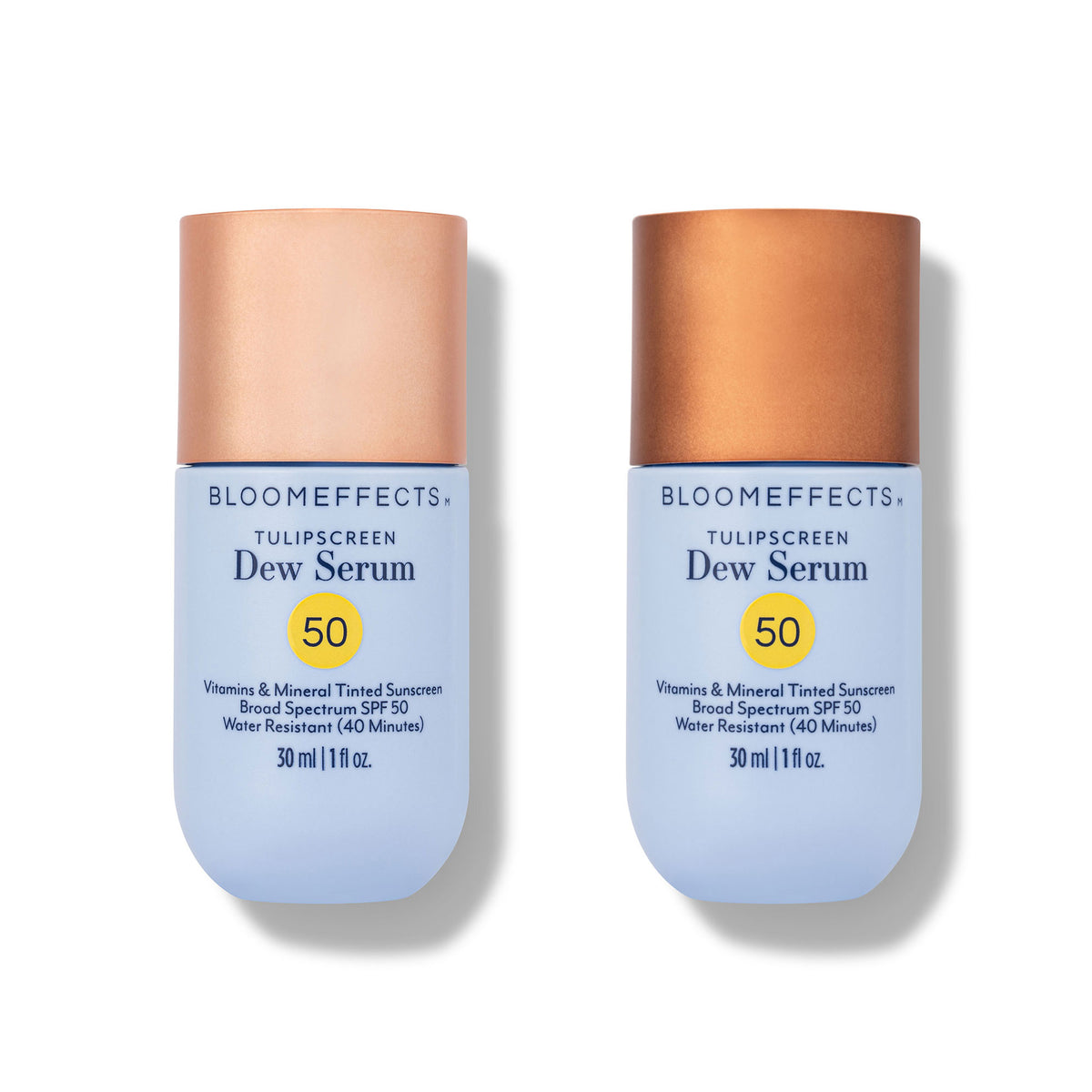
Tulipscreen™ Dew Serum combines hydration, the Proprietary Dutch Tulip Complex™, and sun protection in a single elegant step with mineral-based Broad Spectrum SPF 50 protection. The Tulipscreen™ Shield & Glow SPF Sunstick makes topping up your SPF easy.
The Evening Routine: Step by Step
The evening routine is where repair and renewal happen.
Step 1: Oil-Based Cleanser or Cleansing Balm (Double Cleanse)
If you have worn SPF or makeup during the day, start with an oil-based or balm cleanser. Water-based cleansers alone are not effective at removing mineral SPF or long-wearing formulas, the oil-based first cleanse breaks them down so they can be rinsed away cleanly.
Step 2: Water-Based Cleanser (Double Cleanse)
Follow the oil cleanse with a gentle water-based cleanser to remove any remaining residue and leave the skin truly clean without stripping. The Royal Tulip Cleansing Jelly works beautifully here, it is gentle enough to use twice daily and leaves the skin clean, comfortable, and barrier-intact.
Step 3: Toner or Essence
Same logic as morning, apply on slightly damp skin to maximise absorption and create a plump, receptive base for what follows.
Step 4: Active Serums (Retinoids, Acids, Peptides)
The evening is the optimal time to use more potent active ingredients that work with the skin's natural overnight renewal cycle. If you use a retinoid or exfoliating acid, this is when to apply it, after toner, on a clean base, before richer products.
The Black Tulip Regenerative Brightening Serum is an excellent evening treatment. It combines the Proprietary Black Tulip Complex™ with exosomic peptides from Centella stem cells, Dutch floral growth factor technology, and clinically-proven multi-peptides for cellular renewal that works with the skin's overnight repair processes.
Step 5: Facial Oil (Optional)
Oil-based products go on after water-based serums and before cream moisturisers. An oil seals in the layers beneath it while delivering its own skin-supportive fatty acids and actives. The Royal Tulip Vitamin C Facial Oil (THD ascorbate in an oil-soluble base) is an excellent evening addition for those focused on brightening and firming.
A general rule: a few drops of facial oil should be applied after your moisturizer but as our Royal Tulip Vitamin C Facial Oil is so lightweight you can apply it before based on your preference.
Step 6: Rich Moisturiser or Occlusive
The final step of your evening routine should be your richest, most occlusive product. This seals in everything beneath it and creates the ideal environment for overnight skin repair, preventing trans-epidermal water loss and ensuring the active ingredients have a long, uninterrupted window to work.
The Royal Tulip Moisturizing Nectar is purpose-built for this role. Its nectar-like texture provides deep occlusion alongside the nourishing, barrier-supportive Proprietary Dutch Tulip Complex™. Apply just a pea-sized amount as the final step and allow the skin to work overnight without disturbance.
Common Layering Mistakes to Avoid
Not waiting between layers
Each layer needs a moment to absorb before the next is applied. 30 to 60 seconds between steps is sufficient for most products. Rushing reduces absorption and can cause products to sit and pill on the surface.
Mixing SPF with moisturiser
Always apply sunscreen as its own dedicated step. Mixing it with another product dilutes the UV-filter and compromises protection.
Applying oil before water-based serums
Oil creates a barrier that water-based products cannot easily penetrate. Always apply water-based serums before oil-based products in your layering sequence.
Over-layering in the morning
A morning routine that involves eight steps is more likely to cause pilling, sensitisation, and an overwhelmed skin barrier than a five-step routine done thoughtfully. Prioritise efficacy over abundance.
The Takeaway
Layering skincare correctly is not about doing more, it is about doing things in the right order so each product can perform at its best. Thinnest to thickest, water before oil, actives ingredients before protectives, and mineral SPF always last in the morning. Once these principles are internalised, building and adapting a routine becomes genuinely straightforward.
The goal is always skin that receives what it needs, in the form it can use most effectively, at the time it is most receptive. Get that right, and the results follow.
Build your layered routine with Bloomeffects: Royal Tulip Cleansing Jelly, Royal Tulip Hydrating Bi-Phase Tonic, Royal Tulip Dew Drops, Royal Tulip Moisturizing Nectar, and Tulipscreen™ Shield & Glow SPF Sunstick at bloomeffects.com.